Roof repairs across Perth
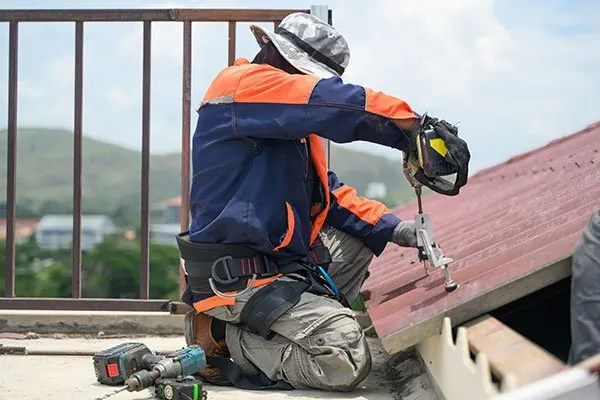
Roofing Perth arranges roof repairs throughout the Perth metro area for tile roofs, steel roofs and low-pitch roofs. That includes tracing leaks, replacing cracked or slipped tiles, re-bedding and re-pointing ridge capping, replacing rusted sheets, re-sealing or replacing flashings, and clearing valleys and gutters that are backing water up into the roof. The work is carried out by independent local roofing contractors, and every repair starts with an inspection.
Common repairs on Perth roofs
Concrete and terracotta tiles
- Cracked ridge pointing from years of summer heat, letting water into the bedding.
- Cracked or slipped tiles, often after someone has walked on the roof to fix an aerial, air conditioner or solar panel.
- Blocked valleys full of leaves, letting water spill sideways under the tiles.
- Perished sarking or no sarking at all on older homes, so small leaks go straight to the ceiling.
Steel roofs
- Rust at laps and fixings, especially on older galvanised sheets and near the coast.
- Loose or failed screws, or old nails that have lifted.
- Flashings pulling away from walls and parapets, or sealant that has dried and split.
- Corrosion from incompatible materials, such as copper pipes or lead flashings draining onto Zincalume.
Any roof
- Leaks around skylights, flues, vent pipes and air-conditioning penetrations.
- Box gutters and internal gutters that overflow inside the roof.
- Storm damage from wind lifting sheets or branches falling.
Finding the real leak
Water travels. It can enter at a flashing two metres uphill, run along a batten or the sarking, and drip onto the ceiling somewhere else entirely. A proper repair visit usually involves:
- Asking when the leak appears (which storms, which wind direction).
- Looking in the ceiling space for staining on timbers and sarking.
- Inspecting the roof above and uphill of the stain, including valleys and flashings.
- Sometimes a hose test, wetting one section at a time while someone watches inside.
If the contractor cannot find the source on the first visit, ask them to say so rather than replacing tiles at random.
When repair stops making sense
Repairs are good value on a roof that is basically sound. They stop being good value when every visit breaks more tiles than it fixes, when steel is holed in many places, or when leaks keep moving. At that point, read our roof replacement vs repair guide and ask for a quote on roof replacement as well, so you can compare.
Before the roofer arrives
- Note which rooms leak and in what weather. Photos of ceiling stains help.
- Clear access to the manhole.
- If you have solar, find out who installed it, in case panels need lifting.
Prices for common repairs are on our cost guide.
After the repair
Ask the contractor for before-and-after photos and a short note of what was done. Keep it with your house records; it is useful for insurance claims and when you sell. Watch the repaired area in the next heavy rain and report any return of the leak quickly.